Unravel any thread in modern California history, and eventually it leads back to the University of California. You can trace tech booms, agricultural shifts, or social movements to their roots, and you will find a UC campus, laboratory, or alumnus waiting there. The University of California isn't just a collection of elite public schools. It is the architectural blueprint of the modern Golden State.
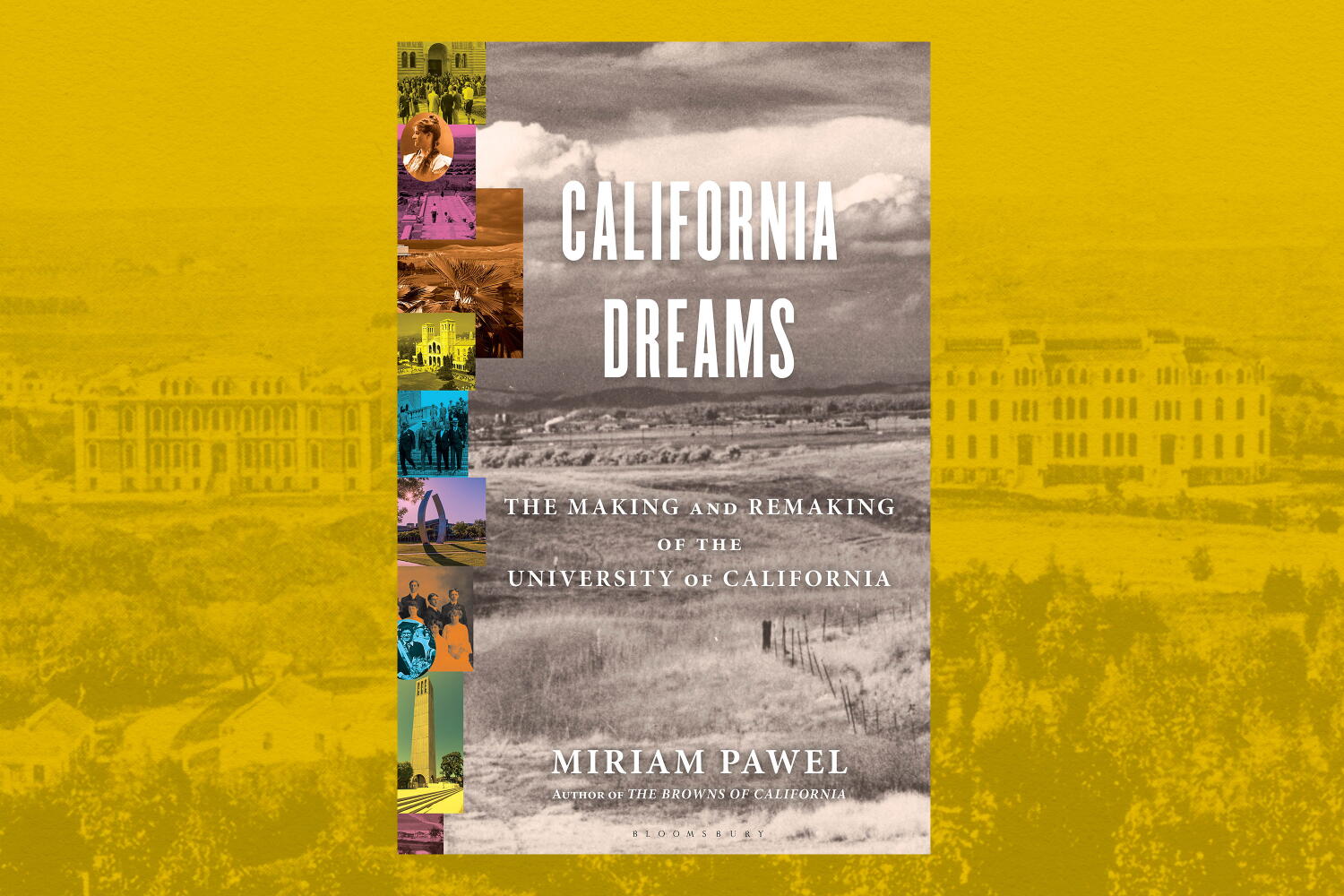
Pulitzer Prize-winning author Miriam Pawel captures this dual reality in her book, California Dreams: The Making and Remaking of the University of California. She maps out how a massive $50 billion public university system served as an engine of unprecedented upward mobility while constantly battling over access, equity, and politics. But behind the administrative milestones and Nobel laureates lies a messy, fractured history. The institution built California's economy, yet it frequently fractured under the weight of its own rapid expansion and deep-seated social divides.
The Grand Promise of Access and Excellence
From its 19th-century inception, the University of California operated on a radical premise. Higher education should belong to the many, not just an inherited elite. Think about that for a second. In an era when universities across the United States functioned largely as country clubs for the wealthy, California tried something entirely different. It promised to marry academic excellence with broad public access.
You didn't have to sacrifice prestige to educate the working class. That was the core of the dream.
State planners built a multi-campus network designed to scale alongside the population boom. By the mid-20th century, under visionary leaders like Clark Kerr, the UC system became a global model for higher education. It produced patents, drove agricultural revolutions in the Central Valley, and fed a hungry post-war economy with skilled engineers, scientists, and teachers.
Where the Foundation Cracked
Growth rarely happens without collateral damage. As the university expanded through war, economic swings, and massive demographic shifts, it turned into a battleground for the soul of the state.
Excellence and access spent decades locked in a turf war. Who gets in? Who pays? Who gets left outside the gates?
These questions sparked fierce fights over affirmative action, free speech, and tuition hikes. When student activism boiled over in the 1960s and 1970s, administrators panicked. Kerr famously noted that the university wasn't there to make ideas safe for students, but to make students safe for ideas. Yet, the institution often tried to suppress the very radicalism that gave its campuses their intellectual pulse.
Look at how the system dealt with diversity. For generations, the promise of upward mobility bypassed marginalized communities. It took relentless pressure, student protests, and programs like the Educational Opportunity Program to force campuses like UC Santa Barbara and Berkeley to reflect the actual demographics of California. Even then, progress arrived in fits and starts, marred by political blowback and funding cuts.
Personal Arcs Behind the Institutional Behemoth
History books love to talk about regents, budgets, and master plans. They rarely capture what it feels like to live through the shifts. Pawel anchors her narrative in personal stories, following five distinct graduates across different eras to show the human cost and triumph of the UC system.
Take Milicent Washburn Shinn, one of just forty-three graduates in Berkeley's class of 1880. Male faculty and students treated women as campus curiosities back then, dismissing them with terms like bluestockings. Yet Shinn carved out a pioneering path in the nascent field of child psychology.
Fast forward nearly a century, and you find figures like David Mas Masumoto, a third-generation Japanese American farmer's son from the San Joaquin Valley. His family had been incarcerated during World War II under Executive Order 9066. When he arrived at UC Davis in 1972, he walked into a world shaped by the radical activism of the previous decade. That environment pushed him far beyond his rural roots, eventually leading him to write award-winning books about his family's land and history.
These individual journeys expose the real friction point. The institution gave them the tools to change their lives, but they had to fight institutional inertia and cultural prejudice every step of the way.
The Modern Reckoning
Today, the University of California faces a completely new brand of existential crisis. It is a massive enterprise comprising ten campuses, six health centers, and three national laboratories. It employs hundreds of thousands of people and educates nearly 300,000 students.
Yet, public funding has dwindled over the decades, forcing campuses to rely heavier on out-of-state tuition and private funding. Inequality has surged across the state, threatening the very engine of social mobility that built California's middle class in the first place.
If you want to understand why California politics feel so polarized right now, look at the university. It remains the primary arena where debates over immigration, race, labor, and economic disparity play out in real time.
The UC system built the Golden State. It also exposed every fracture line running underneath it. Whether it can survive the current wave of political and financial pressure without losing its founding soul remains the defining question of its next chapter.