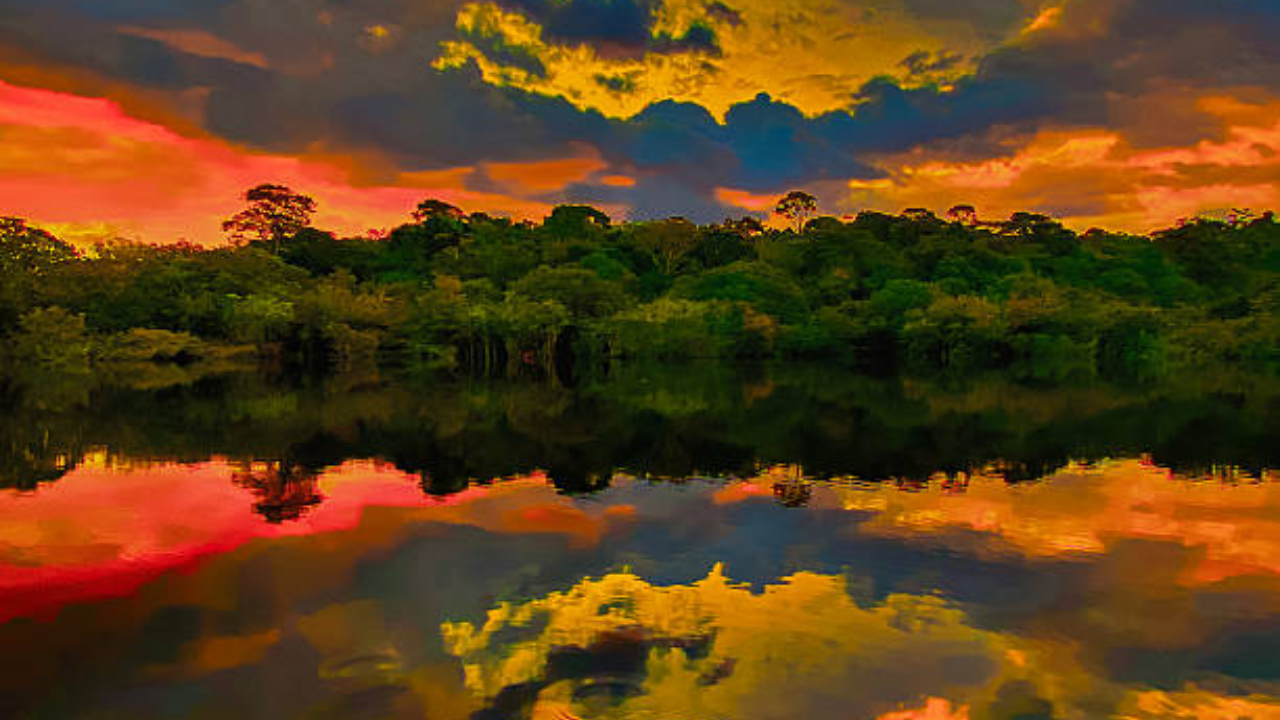
Henry Ford hated depending on anyone else. When British cartels squeezed the global rubber market in the 1920s, the automotive titan didn't negotiate. He decided to grow his own rubber right in the middle of the Amazon rainforest.
It sounds like industrial hubris written by a novelist. Yet in 1927, Ford secured a massive concession from the Brazilian government covering over a million hectares along the Tapajós River. He envisioned a self-contained American company town complete with strict Midwestern values, running water, and modern sanitation, all designed to feed raw latex straight back to his Michigan car assembly lines.
Instead, the project became one of the most expensive corporate disasters of the twentieth century. By the time Ford unloaded the property in 1945 for a paltry $250,000, he had burned through roughly $20 million, watched his utopian rules spark a bloody worker revolt, and learned a brutal lesson about fighting biology with assembly lines.
The Obsession Behind Fordlandia
Why did Ford take such a massive gamble on the jungle? Rubber was the critical choke point of automobile manufacturing. Every Model A required tires, tubes, gaskets, hoses, and engine mounts made from natural rubber.
Almost all of that supply came from British and Dutch plantations in Southeast Asia. Those Asian operations originated from seeds smuggled out of Brazil decades earlier by Henry Wickham. When British rubber cartels propped up prices through the Stevenson Plan in the early 1920s, Ford flew into a rage. Paying high prices went against every grain of his manufacturing religion.
He wanted total vertical integration. If his factories needed rubber, his company would own the dirt it grew on.
In exchange for a million hectares of raw South American wilderness, Ford promised the Brazilian government a share of future profits. He sent ships loaded with prefabricated buildings, power generators, sawmills, and hospital gear up the river. He put a Danish sea captain with zero agricultural background in charge because he believed factory efficiency translated to any discipline.
That assumption proved fatal.
Culture Clash and the 1930 Riot
Ford wanted his Amazon outpost to look and act like Dearborn, Michigan. He imposed bizarre rules on local workers who lived in a completely different climate and culture.
Alcohol, gambling, and tobacco were strictly banned. The town cafeteria served brown rice, wholemeal bread, oatmeal, and canned peaches—foods Ford deemed healthy, but which his Brazilian workforce despised. Instead of letting workers labor during the cool morning and evening hours, management forced them into the punishing midday equatorial heat.
Workers were supposed to attend square dances and poetry readings. Instead, they snuck away to nearby settlements upstream to find cold beer, music, and social life.
Tension snapped in December 1930. When managers altered the cafeteria lines and enforced stricter rules, angry workers grabbed machetes. They smashed the cafeteria, chased American supervisors into the jungle, and cut the town's communication lines. Order was only restored when the Brazilian military police arrived by gunboat.
Life quieted down afterward, but the social friction never truly vanished. The core problem, however, wasn't the human element. It was the trees.
Why the Trees Refused to Cooperate
Wild rubber trees (Hevea brasiliensis) do not grow in dense clusters. They stand scattered deep inside the rainforest, separated by miles of other species. That natural spacing is an evolutionary defense mechanism against local pests and fungal diseases.
Ford's agricultural planners ignored this completely. They planted millions of rubber trees in tight, uniform rows on thin, hilly soil.
South American leaf blight ripped through the plantations almost immediately. Caterpillars, lace bugs, and red spiders joined the fungal onslaught, stripping the trees bare and rotting the roots in the washed-out soil. Year after year, replanted saplings died by the thousands.
Ford eventually hired a real plant pathologist, James Weir, who moved operations downstream to a new site called Belterra. While Belterra fared slightly better with imported Asian budwood, the venture was already bleeding money.
By the end of World War II, synthetic rubber had captured the market, and Southeast Asian plantations were back online. Ford Motor Company had no use for its Brazilian experiment anymore. The total investment had topped $20 million, yet the company sold Fordlandia and Belterra back to the Brazilian government for just $250,000.
Henry Ford never even visited the town he spent two decades trying to build.
If you're studying business history or corporate strategy, the takeaway is clear. You can engineer processes, streamline logistics, and dictate prices at home, but you cannot rewrite ecological reality just because you have a balance sheet big enough to try.