History books often miss the raw, breathtaking details of how a handful of Indian horsemen armed mostly with lances and swords outmaneuvered modern artillery. On September 23, 1918, the coastal city of Haifa in the Ottoman Empire faced an impossible tactical situation. Defending Ottoman forces had heavily fortified the rocky slopes of Mount Carmel, locking down machine-gun nests that could chew up infantry units in seconds.
Enter the Jodhpur, Mysore, and Hyderabad Lancers. Part of the 15th Imperial Service Cavalry Brigade, these soldiers didn't wait for heavy trench warfare to grind down the enemy. They executed a daring, full-speed cavalry charge right into the teeth of entrenched machine guns. It stands today as one of the last great classical cavalry charges in modern military history, changing the fate of a city and leaving an indelible mark on foreign soil.
The Hero Who Led the Charge
At the center of this legendary battle was Major Thakur Dalpat Singh Shekhawat, commander of the Jodhpur Lancers. Known widely as the "Hero of Haifa", he didn't command from a safe distance behind the lines.
Accompanied only by his trumpeter, Major Dalpat Singh spearheaded a direct assault against a heavily fortified machine-gun position. His unit faced fierce, direct fire, but their sheer speed and element of surprise shattered the enemy lines. He captured the gun, neutralised the crew, and forced opposing commanders to surrender. Tragically, he took critical machine-gun fire during the assault and succumbed to his injuries shortly after, never getting to see the final victory he engineered.
For his extraordinary valor, he was awarded the Military Cross. But his true legacy lives on in the hearts of the people who call Haifa home today.
Beyond the Battlefield Statistics
We often look at military history through cold numbers, but the reality of the Battle of Haifa reveals staggering tactical bravery.
- The Jodhpur Lancers suffered only eight men killed and 34 wounded.
- Despite these minimal losses, they captured over 700 prisoners.
- The cavalry seized 17 field guns and 11 machine guns from heavily armed Ottoman forces.
Following Major Dalpat Singh's fall, Captain Aman Singh Bahadur stepped up to take command, rallying the remaining troopers to finish the mission. Alongside leaders like Dafadar Jor Singh, Captain Anop Singh, and Second Lieutenant Sagat Singh—who earned honours such as the Indian Order of Merit and the Military Cross—the lancers proved that tactical audacity could overcome superior defensive positions.
How Israel Remembers What the World Forgot
For decades, local generations in Israel grew up believing that British forces alone liberated Haifa from Ottoman rule. Local historical societies dug deeper into archives and discovered the truth: it was Indian horsemen who broke the back of the defense.
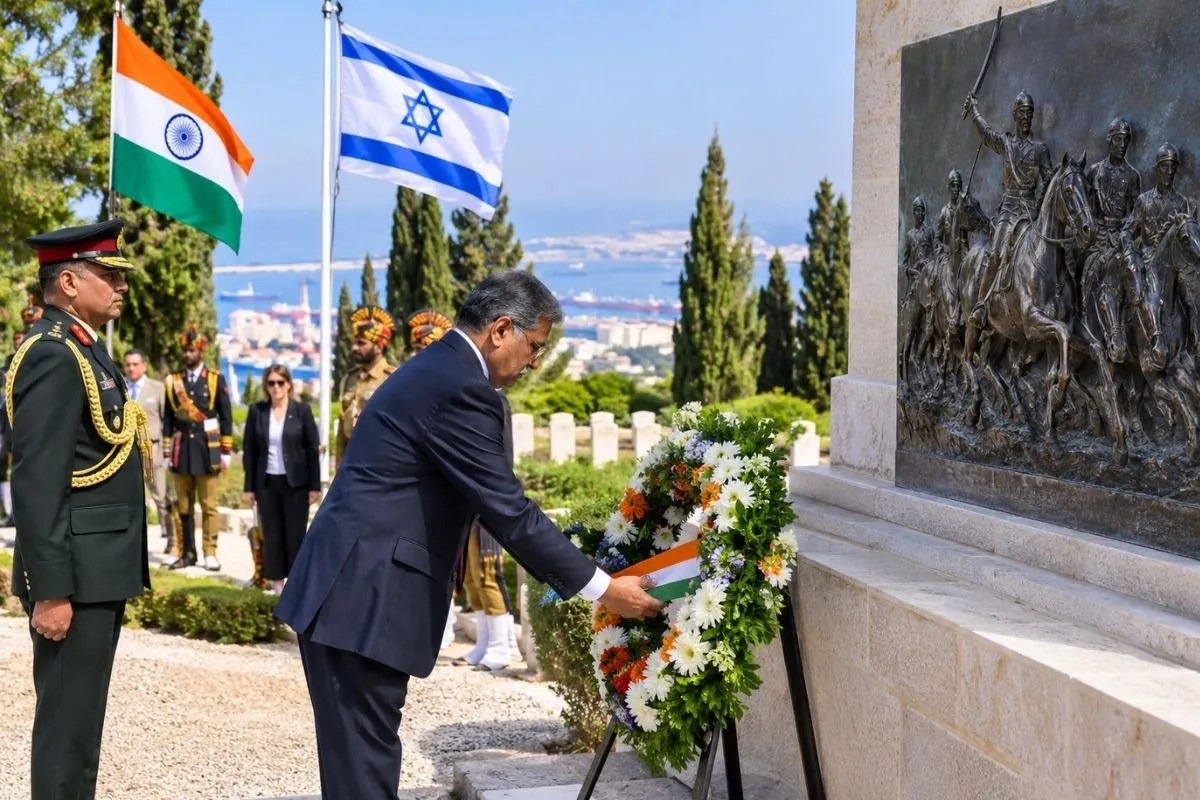
Today, the city of Haifa ensures this truth isn't lost to time. The municipality has incorporated the story of the Indian cavalry into local school history textbooks, hosting special lectures for youngsters so they understand the real roots of their city's freedom. Every year, Haifa Day commemorations bring together Israeli municipal leaders and Indian diplomats at the Haifa Cemetery to lay wreaths and honor the fallen.
Deputy Mayor Sarit Golan-Steinberg has repeatedly emphasized that these soldiers' sacrifices form an unshakeable foundation for modern ties between India and Israel. From the renaming of Teen Murti Haifa Chowk in New Delhi to the ongoing educational initiatives in Israel, the memory of these brave hearts refuses to fade. Nearly 900 Indian soldiers lie resting in military cemeteries across Haifa, Jerusalem, and Ramle, quiet sentinels of an extraordinary chapter of shared history.
Take a moment to look past standard textbook summaries. Real courage isn't about massive armies grinding away in trenches; sometimes, it's about a few dozen horsemen riding straight into history and changing the map forever.