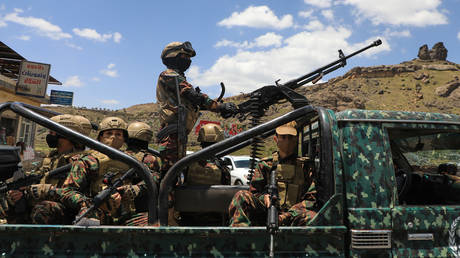
When a government turns communication blackouts and heavy security crackdowns into standard policy, the rest of the world usually looks away. That is precisely what is happening right now in Pakistan-occupied Jammu and Kashmir (PoJK) and Pakistan-occupied Gilgit-Baltistan (PoGB).
While international headlines chase fleeting geopolitical distractions, local populations face severe civic restrictions, arbitrary detentions, and a stifled press. Sardar Shaukat Ali Kashmiri, chairman of the United Kashmir People's National Party (UKPNP), recently took this grim reality to the 63rd session of the United Nations Human Rights Council (UNHRC) in Geneva. He didn't mince words. He laid bare how a peaceful movement for basic civic rights has been met with state-sanctioned force.
If you want to understand why local leaders are begging international bodies to step in, you have to look past the sanitized press releases and examine what is actually happening on the ground.
The Reality Behind the Iron Curtain in PoJK
Repression in PoJK didn't happen in a vacuum. According to testimonies presented at the UNHRC, conditions deteriorated sharply following crackdowns against civilian protests. We aren't talking about standard crowd control. Reports highlight arbitrary arrests, violent dispersals, mysterious disappearances, and strict clampdowns on internet and mobile data.
When you cut off a region's communication infrastructure, you do more than silence dissent. You block emergency services, hide injuries, and prevent families from knowing if their loved ones are safe in custody.
Kashmiri leaders are demanding a very simple truth: peaceful dissent is not terrorism. Demanding basic political representation, fair land rights, and a say over local natural resources is not a criminal act. Yet, speaking up in PoJK often lands activists in prolonged detention without due process.
Resource Exploitation and Silence in Gilgit-Baltistan
While PoJK deals with the immediate aftermath of street-level crackdowns, Pakistan-occupied Gilgit-Baltistan (PoGB) faces a different kind of systematic erosion. The territory suffers from a complete lack of genuine political representation. Decisions about land ownership, infrastructure, and the extraction of natural resources are made far away, with zero consultation given to the local communities who actually live there.
Development projects in PoGB are routinely pushed through under a veil of secrecy. Locals watch their water, minerals, and land managed by authorities who treat the region as an internal colony rather than a home for millions of citizens. When residents ask for transparency or environmental protections, they are labeled disruptors.
Why the UNHRC Must Move Past Empty Words
Appeals to international organizations often feel like shouting into an empty canyon. Bureaucracy moves slowly while people suffer in holding cells. However, the pressure being applied by diaspora networks and political activists is starting to puncture the diplomatic wall of silence.
During his address under Agenda Item 4 at the UNHRC, Kashmiri laid out core demands that international human rights monitors cannot afford to ignore:
- Establish independent, impartial investigation mechanisms to look into civilian deaths, injuries, and alleged disappearances.
- Force authorities to disclose the whereabouts of missing persons and immediately release political prisoners.
- Restore unrestricted mobile and internet communications across all affected zones.
- Initiate a genuine, inclusive democratic dialogue regarding land rights, resource allocation, and local governance in PoGB.
Without independent international oversight, state forces operate with total impunity. Documenting abuses is dangerous, and talking about them publicly carries heavy personal risks.
Stop pretending that regional stability can be built on the back of censorship and mass arrests. Real stability starts when basic human dignity is respected, and right now, millions of people living across PoJK and PoGB are being denied that fundamental baseline. The international community needs to stop treating these regions as forgotten administrative blind spots and start demanding true accountability.