The 1952 Disaster That Forced Aviation to Fix Its Flaws
When an underwater autonomous drone detected a gleaming aluminum fuselage 2,000 feet beneath the waves off Puerto Rico's coast, it solved a 74-year-old mystery. The discovery of the Clipper Endeavor—a Pan Am Douglas DC-4 that plunged into the Atlantic on Good Friday, 1952—instantly grabbed headlines.
The finding matters because of what happened on board after impact. For a deeper dive into this area, we recommend: this related article.
On April 11, 1952, Flight 526A departed San Juan heading for New York with 64 passengers and 5 crew members. Nine minutes after takeoff, double engine failure forced the pilot into a emergency water landing. The crash landing went surprisingly well. Everyone survived the initial impact.
Then utter chaos broke out. For additional details on the matter, detailed analysis can also be found on BBC News.
Fifty-two people drowned in calm seas with life vests sitting inches under their seats. They didn't know where the vests were. They didn't know how to inflate them. Paralyzed by fear, many passengers stayed in their seats as water poured in. The plane sank in just three minutes.
Only 17 people survived.
That tragedy forced regulators to admit a harsh truth: building safer planes meant nothing if passengers didn't know how to save themselves during an emergency.
How One Tragedy Invented the Safety Demonstration
If you've flown on a commercial airline, you've heard the safety briefing: “In the event of a sudden change in cabin pressure…” or “Your seat cushion can be used as a flotation device.”
You probably ignore it. Most people do.
Before 1952, flight crews didn't give safety demos. Flying was marketed as luxurious, smooth, and glamorous. Warning passengers about water landings or showing them how to put on life vests was considered bad for business because it scared travelers.
The investigation by the Civil Aeronautics Board—the precursor to the FAA—changed everything. The report showed that almost every death in the Pan Am crash was preventable.
The disaster forced three massive shifts in global aviation:
- Mandatory Pre-Flight Briefings: Flight attendants were required by law to demonstrate exit routes, oxygen mask operation, and life jacket usage before departure.
- Redesigned Flotation Gear: Life vests and rafts were relocated to obvious, accessible spots so passengers wouldn't freeze or search blindly in the dark.
- Standardized Evacuation Rules: Airlines had to prove an entire aircraft could be evacuated in under 90 seconds, even with half the exits blocked.
Every modern safety feature—from floor-path lighting to the yellow inflation tabs on life vests—stems directly from what went wrong on the Clipper Endeavor.
Deep Sea Drones and the Search Effort
Finding a plane sitting under 2,000 feet of water isn't easy. The Air/Sea Heritage Foundation spent seven years piecing together clues to find it.
The breakthrough started in 2019 when searcher Russ Matthews came across a forgotten report about a piece of luggage from the flight washing up on a Florida beach decades ago. That clue led researchers to sift through old Coast Guard logs, Civil Aeronautics Board reports, and forgotten hearing notes from Puerto Rican archives.
Pan Am Flight 526A Timeline (April 11, 1952)
-----------------------------------------------------------------------
00:00 - Takeoff from San Juan, Puerto Rico
00:09 - Dual engine failure reported
00:12 - Ditch landing completed on water (All 69 survive initial impact)
00:15 - Plane sinks into 2,000 ft of water (52 drown due to panic/confusion)
The real key was a flight log from Air Force pilots on a routine training mission who happened to witness the 1952 crash and sketched a rough map.
Combining those historical records with ocean current models allowed the team to narrow the search area to 10 square nautical miles. Using an autonomous underwater vehicle equipped with side-scan sonar, the search crew located the wreckage on its very first pass.
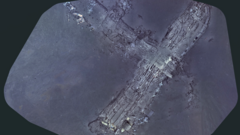
Photos taken by the underwater drone show the DC-4 resting in two main pieces, with the iconic blue Pan Am logo still visible on the nose section.
What Passengers Keep Getting Wrong During Emergencies
It's easy to assume passengers today are smarter than those in 1952. We aren't.
Human psychology in a crisis hasn't changed. When panic hits, people freeze or fall back on routine habits. Safety experts call this "negative panic." Instead of screaming or rushing for the doors, a surprising number of people simply sit still, waiting to be told what to do.
We see this same human error happen today in modern aviation evacuations:
Grabbing Carry-On Luggage
During emergency landings, passengers constantly try to grab overhead bags before exiting. On hot-running evacuations where seconds matter, stopping for a laptop bag can get people behind you killed.
Ignoring the Exit Count
Most people look forward toward the main boarding door. If that door is blocked or fire-damaged, they panic. Knowing how many seat rows are between you and the nearest exit—behind you or ahead—is crucial in a smoke-filled cabin.
Assuming You'll Remember Under Stress
In an emergency, fine motor skills disappear. Unbuckling an airplane seatbelt requires pushing a latch up, but under high stress, people instinctively press down like they're in a car.
What to Do on Your Next Flight
Safety briefings are boring because they're repetitive. That's the point. But treating those two minutes as useless filler is a mistake.
Here's how to actually use that time to protect yourself:
- Count the Rows: Count the seatbacks between your seat and the two nearest exits (front and rear). If smoke fills the cabin, you won't be able to see the exit signs. You'll have to feel your way along the seats.
- Locate the Vest: Reach under your seat right now. Touch the pouch containing your life vest so you aren't searching blindly if water is pouring over your feet.
- Know the Seatbelt: Remind yourself that airplane seatbelts lift up, not push in.
- Keep Your Shoes On: During takeoff and landing—statistically when most incidents occur—keep your shoes on. Running across broken metal or burning asphalt in socks is a bad situation.
The discovery of Pan Am Flight 526A is a reminder that air travel rules are written in hard lessons. Pay attention to the briefing next time you board. It exists because 52 people in 1952 didn't get one.

:max_bytes(150000):strip_icc()/copenhagen-dk-COPENHAGENTG0721-4a481cb6025b43d1a781b1571b144f46.jpg)