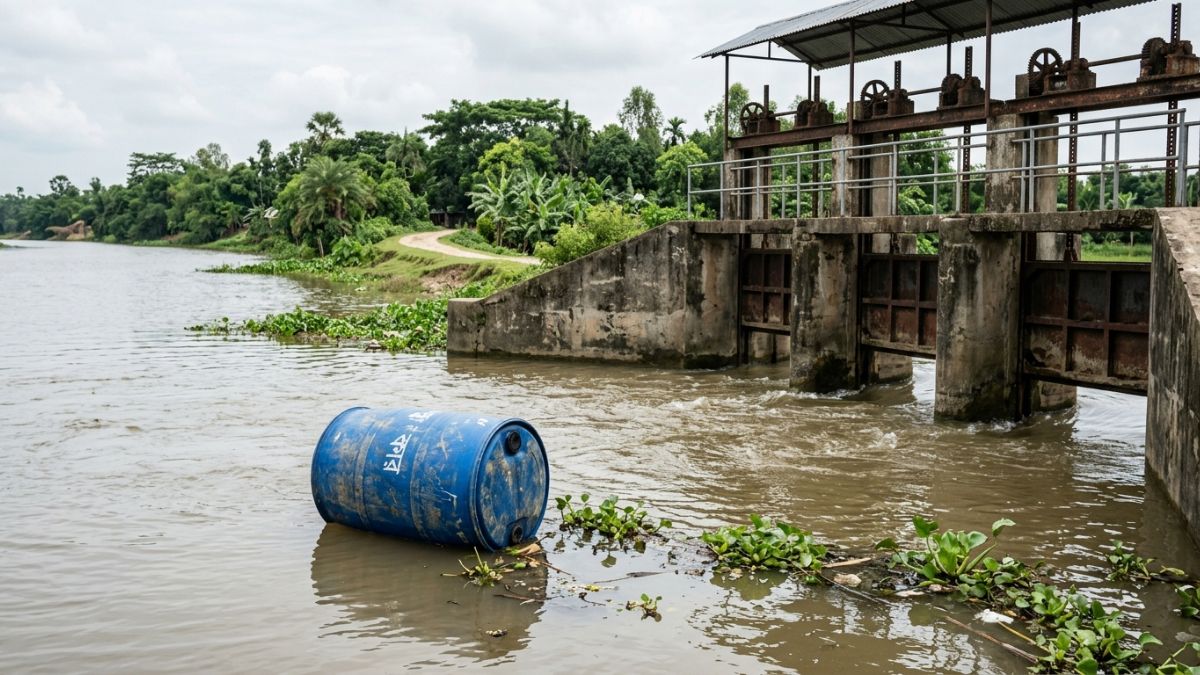
A body inside a blue plastic drum floating near a water sluice gate is the kind of grim image that stops you dead in your tracks. Niranjan Chandra Sutradhar didn't just vanish. He was hunted, killed, and discarded.
The 50-year-old Hindu jeweller from Mymensingh, Bangladesh, left his shop in the Atharbari Building area and simply never came home. When local authorities hauled the floating plastic drum out of the water, they found visible injuries marking a brutal end. They also found a cooperative credit union token in his trouser pocket, which is how his identity finally surfaced.
People want simple answers when tragedies like this hit the news cycle. Was it targeted religious violence? Was it a robbery gone wrong? Right now, local police are treating it strictly as a homicide investigation based on the physical trauma found on the victim's body. But looking at the broader security situation for religious minorities in Bangladesh, you can't just separate a violent crime from the chaotic social climate surrounding it.
Sutradhar went missing on September 20. His family didn't immediately run to the police station or sound global alarm bells. Why? Because he had a habit of staying away from home for stretches of time, making his absence seem routine at first. A nephew reportedly spotted him near the Stadium area the next day, but after that, total silence until the recovery of the drum.
Context matters here. Hindus make up roughly eight percent of Bangladesh's 170 million population, amounting to about 13.1 million people. Organizations like the Bangladesh Hindu Buddhist Christian Unity Council track communal flashpoints meticulously. They have documented thousands of incidents of violence against minorities since the massive political shifts and the ouster of former Prime Minister Sheikh Hasina. Even though high-profile riots or systemic abuses fluctuate under different political administrations, the underlying vulnerability for minority business owners remains a constant, heavy shadow.
Think about what it means to run a jewelry shop as a minority artisan in a tense district. Jewelry stores carry portable, high-value assets. They make natural targets for criminals looking for a quick payday, but they also sit at the crosshairs of localized religious friction. Police have not yet linked Sutradhar's killing to sectarian hatred, but investigators are peeling back layers to check if his business dealings or his identity played a role in the attack.
You have to look at past horror stories to understand why minority communities feel on edge. Look at the brutal mob lynching of Dipu Chandra Das, a 27-year-old Hindu garment worker who was beaten to death, hung from a tree, and set on fire after allegations involving religious insults. When incidents like that happen with terrifying impunity, every suspicious death of a minority citizen carries an immense weight of fear and suspicion.
Families are left mourning while investigators sift through conflicting motives. Was this a robbery targeting shop inventory or cash? Was it a personal vendetta? Or was it something darker tied to the communal tensions that flare up too easily across the region?
Right now, the priority rests on the Mymensingh police department to follow the physical evidence, track down the last known contacts, and deliver transparency. If you care about human rights, rule of law, and the safety of vulnerable populations, keep your eyes on how this investigation unfolds. Justice delayed in cases of violent crime only breeds more fear. Demand accountability, watch the police reports, and refuse to let individual murders get buried under geopolitical noise.