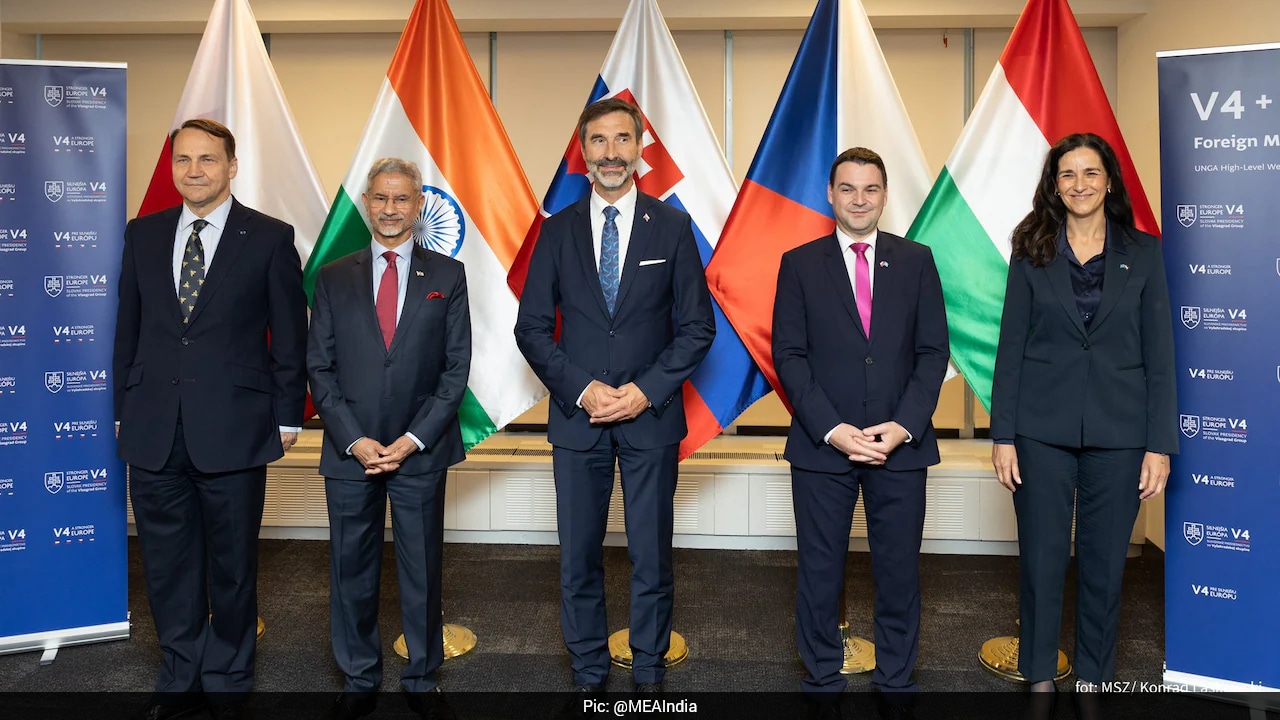
India's foreign policy machine doesn't do random photo ops. When External Affairs Minister S Jaishankar sits down with the foreign ministers of Poland, Hungary, Slovakia, and the Czech Republic on the sidelines of the UN General Assembly, you know a new strategic corridor is opening up.
Most headlines treated it as just another diplomatic meeting in New York. They missed the underlying weight of the room. This wasn't standard UN small talk. It was the inaugural foreign ministers meeting between India and the Visegrad Group, otherwise known as the V4.
If you haven't been paying attention to Central Europe's industrial powerhouse economies, now is the time to start.
Breaking Down the Visegrad Plus India Equation
Why the V4? Because these four Central European nations punch well above their weight class economically and technologically. They are industrial heavyweights. They specialize in advanced engineering, manufacturing, automotive technology, and R&D.
India's relationship with the European Union as a bloc can sometimes move at a bureaucratic crawl. Dealing with Brussels is notoriously complex. By carving out a direct diplomatic and economic track with the V4, New Delhi gets a nimble, pragmatic channel into Europe's manufacturing core.
Jaishankar called the gathering a new historic occasion. He isn't given to hyperbole. The concrete takeaways from the New York talks prove this partnership means business.
What Was Actually Decided Behind Closed Doors
Diplomacy without outcomes is just expensive tourism. The V4 plus India format delivered immediate, actionable steps:
- The Annual Business Forum: A dedicated platform designed to bridge Indian enterprises with Central European industrial ecosystems.
- Annual Ministerial Check-ins: The five nations agreed to institutionalize these meetings, locking in a regular cadence of high-level strategic alignment.
- Defence Technology Resurgence: Refreshing a long-standing history of military and technical cooperation.
- Innovation and Mobility: Deepening research partnerships, technology sharing, and smoother people-to-people pathways.
These aren't vague policy statements. They are structured frameworks targeting specific gaps in supply chains, technology sharing, and industrial manufacturing.
Connecting Central Europe to India Realities
Look at what Poland, Hungary, Slovakia, and the Czech Republic bring to the table. They are deeply embedded in European supply chains. They possess incredible talent pools in engineering and hard tech.
Meanwhile, India commands massive scale, digital infrastructure mastery, and an expanding industrial base. Put them together, and you bypass the traditional bottlenecks of pan-European consensus building.
During the briefing, discussions didn't stay locked in bilateral trade. The ministers tackled heavy global flashpoints head-on. They weighed in on the ongoing Ukraine conflict and mounting tensions in the Gulf. When middle powers start syncing their watches on global security crises, the traditional Western-centric diplomatic axis shifts a little bit more toward a multipolar reality.
What Happens Next
If you run a business, build technology, or track global trade corridors, watch how the upcoming V4 India Business Forum shapes up. Expect targeted delegations visiting tech hubs in Warsaw, Prague, Bratislava, and Budapest. Look for joint ventures in specialized manufacturing and defense tech upgrades over the next year.
Don't wait for mainstream commentators to explain it. The architecture for a new Indo-Central European axis is already under construction. Track the implementation of these annual business forums, build regional partnerships in Central Europe now, and position your ventures ahead of the institutional rollout.