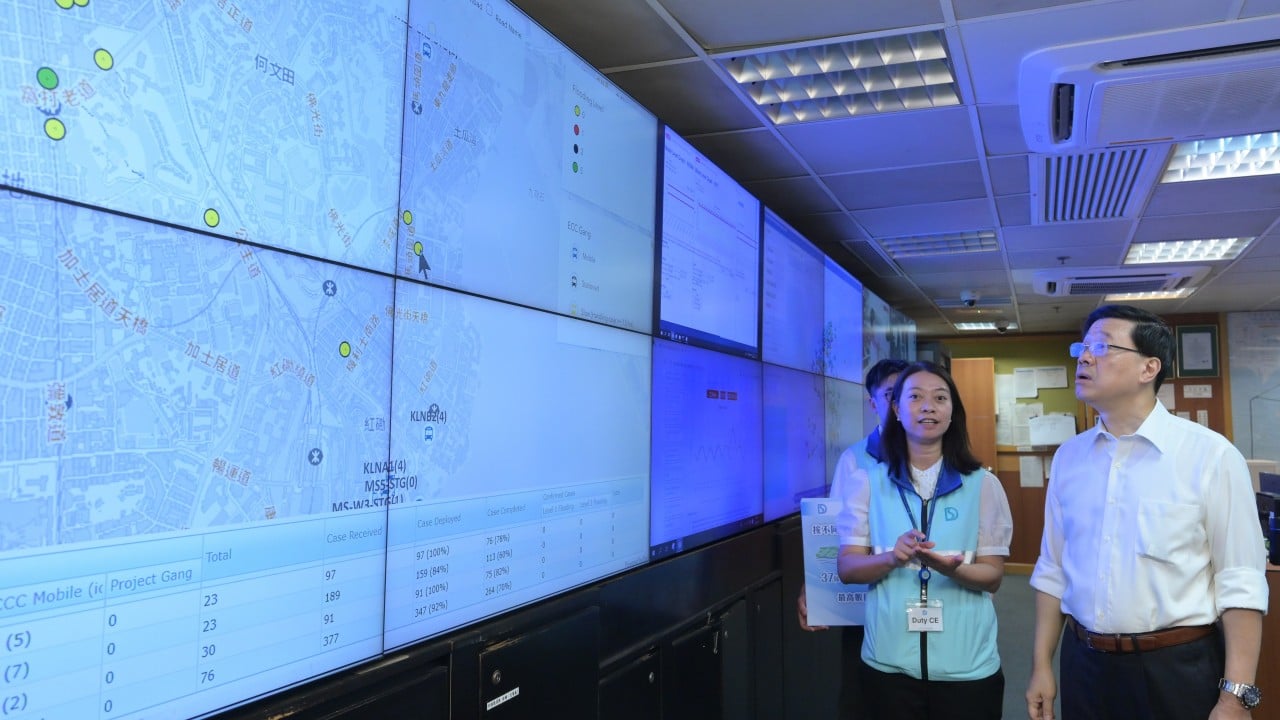
Big Brother isn't moving into your neighborhood. At least, that is what Hong Kong's leadership wants you to believe following the latest policy blueprint.
Chief Executive John Lee recently pulled back the curtain on a proposed "AI city brain," a centralized data project meant to overhaul how the metropolis handles emergencies, weather shocks, and massive tourist surges. Naturally, the public immediately panicked about surveillance. Whenever a government starts talking about an urban intelligence network, people picture a dystopian web of facial recognition cameras tracking their every move.
Lee insists that fear is entirely misplaced.
The system relies on aggregate metrics, not individual profiles. Think daily passenger counts on transit networks, drainage water levels, and public hotline logs instead of personal browsing histories or private text messages. Lawmakers grilled administration officials during a Legislative Council session about privacy barriers, pointing out that bureaucratic red tape usually stops departments from sharing information. Lee's response was simple. You don't need to know who a person is to know that a train platform is dangerously overcrowded.
Breaking Down the Architecture
Urban management in a dense metropolis is a logistical nightmare. Agencies often operate in silos. The Observatory tracks typhoons, the Drainage Services Department monitors flood zones, and the Fire Services Department handles rescue calls. Historically, these groups struggled to talk to each other in real-time.
The new framework aims to fix that structural failure. By feeding operational streams into a unified data-sharing environment, the city hopes to generate early warnings before disasters strike.
Consider how this applies to holiday crowd control. During peak tourism windows like "Golden Week," thousands of visitors flood specific landmarks simultaneously. An intelligent administrative layer can track real-time density numbers and automatically push diversion alerts to public phones, warning people that queuing times are about to triple.
It is traffic forecasting on a municipal scale. It is not criminal tracking.
Addressing the Real Risks
While citizens worry about state surveillance, experts point out that the real threats hiding inside modern machine learning initiatives are entirely different.
The administration's newly announced strategy includes seven key areas of risk governance, featuring a dedicated commissioner for artificial intelligence who will take office next year. This oversight body focuses heavily on stopping criminal exploitation of synthetic media and managing automated agent guidelines rather than spying on local residents.
Yet, governance must go deeper than stopping scams. Youth dependency has quietly emerged as an urgent crisis. School-age children spending excessive hours talking to synthetic chat agents instead of human peers risk slipping into social isolation and mental health distress. Lee addressed this directly, arguing that every educational curriculum needs mandatory ethics modules to build digital literacy early.
Building smart infrastructure requires a delicate balance between public safety and personal freedom. If the administration keeps its promise to keep the city brain focused on logistics rather than individuals, Hong Kong might actually show other dense urban centers how to modernize without crossing ethical lines.
Check your local data permissions, stay informed about municipal tech rollouts, and demand transparency from public agencies before new digital tools go live.


