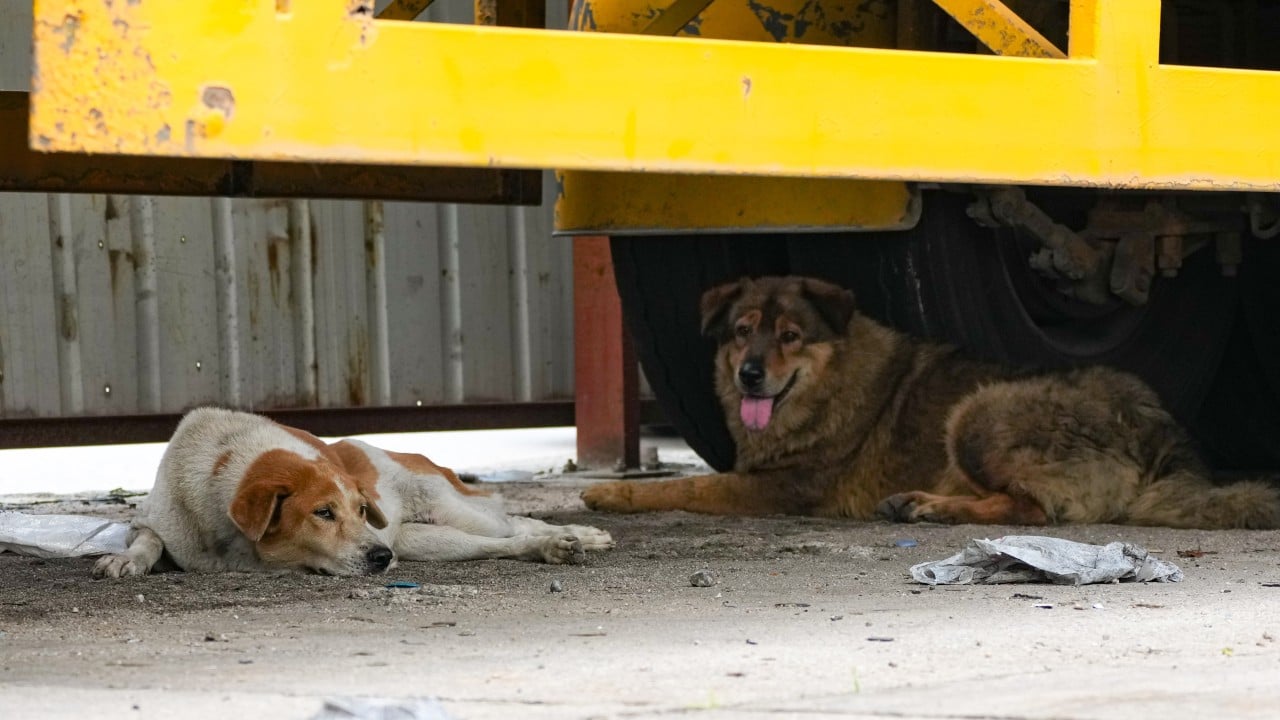
Free-roaming guard dogs chained to industrial concrete in the New Territories live a life built entirely on neglect. When industrial sites get demolished or businesses close down, these dogs often get dumped out into unfamiliar rural spaces, transforming terrified working animals into unpredictable packs. Animal welfare groups and veteran rescuers are speaking out after a suspected fatal mauling put the spotlight back on Hong Kong's unrecorded working canines.
If you think true stray dogs are the ones hunting in packs across industrial outskirts, you’ve got it backward. Kent Luk Ka-chit, founder of Paws Guardian Rescue Shelter, notes that born strays are usually terrified of people because they spend their lives being beaten, chased, and bullied. True strays cower. Former warehouse dogs do not.
Instead, industrial guard dogs develop intense territorial instincts. They spend months or years guarding a specific plot of land, barking at every truck, delivery driver, and stray animal that wanders too close. When businesses abandon these properties without rehoming the animals, those extreme guarding instincts don't just vanish. The dogs form tight packs, follow a dominant leader, and treat any human trespasser as an immediate existential threat.
Mark Mak Chi-ho, executive chairman of the Veterinary Services Society, points straight at a massive legal loophole that keeps this cycle spinning. Right now, irresponsible keepers don't microchip their guard dogs. Why? Because an unchipped dog leaves no paper trail. If animal control picks up an abandoned guard dog or if something goes wrong, the owner simply denies ownership.
Without proof of ownership, prosecution for animal abandonment is nearly impossible under current laws. Mak argues that the government needs to introduce a strict "duty of care" clause into the Prevention of Cruelty to Animals Ordinance. Under a proper system, simply possessing a dog without a microchip or failing to meet baseline welfare standards should instantly trigger an offense.
Hong Kong's Agriculture, Fisheries and Conservation Department reports that captured stray numbers dropped from 463 in 2023 to 398 in 2025. But those official tallies completely miss the reality of unregistered, free-roaming working dogs drifting through the New Territories. These animals come and go without a trace, slipping right through the cracks of municipal oversight.
Fixing this mess requires a complete overhaul of how industrial zones handle security animals. Business owners can't just treat living creatures like disposable security hardware, locking them up with barely any socialization and dumping them when leases expire. Animal advocates are pushing for mandatory registration, regular welfare checks on industrial properties, and trap-neuter-release strategies to manage pack dynamics before tragedy strikes again.
If you run a business or manage industrial properties in rural areas, stop relying on unregistered guard dogs as cheap security alarms. Register every animal, take full legal responsibility for their welfare, and ensure they have a safe exit plan when operations shut down. Public safety and animal welfare depend on closing the legal loopholes that let negligent owners walk away scot-free.