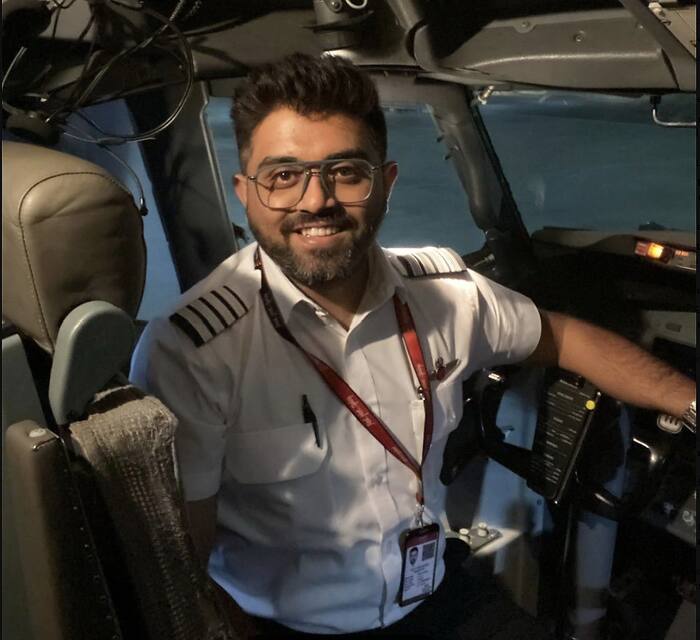
Planes are built to withstand lightning strikes, engine failure, and severe wind shears. They are not built for stabbings at thirty thousand feet.
When Capt. Smit Machchhar found himself bleeding on the floor of a FlyDubai cockpit, flight manuals went out the window. There is no checklist for a colleague turning a routine route into a struggle for survival. On Wednesday, September 30, 2026, a flight carrying 182 people from Dubai to Tel Aviv experienced a nightmare scenario that shook international aviation. Machchhar managed to survive, regain control, and steer the Boeing 737 toward an emergency landing in Tabuk, Saudi Arabia, preventing a catastrophic disaster.
Now recovering in an Abu Dhabi hospital, Machchhar's account of the cockpit attack exposes the terrifying realities of modern aviation security and the thin line separating a normal trip from total disaster.
The Minutes That Pushed a Pilot to the Brink
Flying from Dubai to Tel Aviv is supposed to be standard work for a veteran commander. Machchhar brings seventeen years of total flight experience and eleven years as a captain to the job, having previously logged more than 9,750 flying hours with India's SpiceJet before moving to FlyDubai. Experience didn't stop the unexpected assault by his co-pilot, an Omani national whose motives remain under investigation by Saudi authorities.
During a televised video call with Indian Prime Minister Narendra Modi, Machchhar described the horrifying reality of being attacked from within his own workspace.
"I had so many wounds. I had fallen down," Machchhar said from his hospital bed, his head bandaged and breathing tubes in place. "I was fighting for my life. At one point, I realized that if I didn't get up... then passengers would lose their lives."
Knocked to the ground and severely injured, Machchhar relied on body memory and pure instinct. Even while physically incapacitated, seventeen years in the air gave him an internal gyroscope that most people lack. He could tell the aircraft was plummeting into a steep, dangerous descent.
Why Aviation Manuals Fail Against Internal Threats
Philip Kean, CEO of Mainland Air and Machchhar's former flight trainer in New Zealand, pointed out a chilling truth about aviation protocols to the press. Pilots train extensively for engine fires, hydraulic failures, and hijacking attempts from outside the flight deck. They do not train for an active, violent assault by the person sitting right beside them.
"I don't think there's much in the handbook for being stabbed," Kean noted. You share coffee, route plans, and checklists with your co-pilot. Trust is baked into the job description. When that trust shatters instantly, the psychological shock is just as lethal as the physical wounds.
Despite the agony, Machchhar crawled toward the cockpit door, managed to open it, and alerted passengers and on-duty crew members—reportedly pilots in training—who rushed forward to overpower and restrain the attacker.
The Mental Armor of a Professional Pilot
How do you survive a life-or-death struggle inside a cramped cabin while a jet is losing altitude? For Machchhar, survival required a mix of professional conditioning and personal grounding.
During those dark minutes on the floor, while fighting off shock and blood loss, he recited the Hanuman Chalisa. The Hindu devotional hymn dedicated to Lord Hanuman served as an anchor for his focus, giving him the mental fortitude to push past his physical limits and drag himself back to the controls.
Global leaders quickly took note of his composure. Israeli Prime Minister Benjamin Netanyahu confirmed the arrest of the attacker in Saudi Arabia, while Prime Minister Modi praised Machchhar's presence of mind for saving 182 lives. Portraits of the pilot have already appeared on walls in Mumbai, transforming a quiet commercial aviator into an unexpected international symbol of resilience.
Incidents like this force the aviation industry to confront uncomfortable questions about cockpit vetting, mental health monitoring, and internal security protocols. Until those changes happen, passengers owe their safety to the rare breed of professionals who refuse to stay down when the floor gives way beneath them.