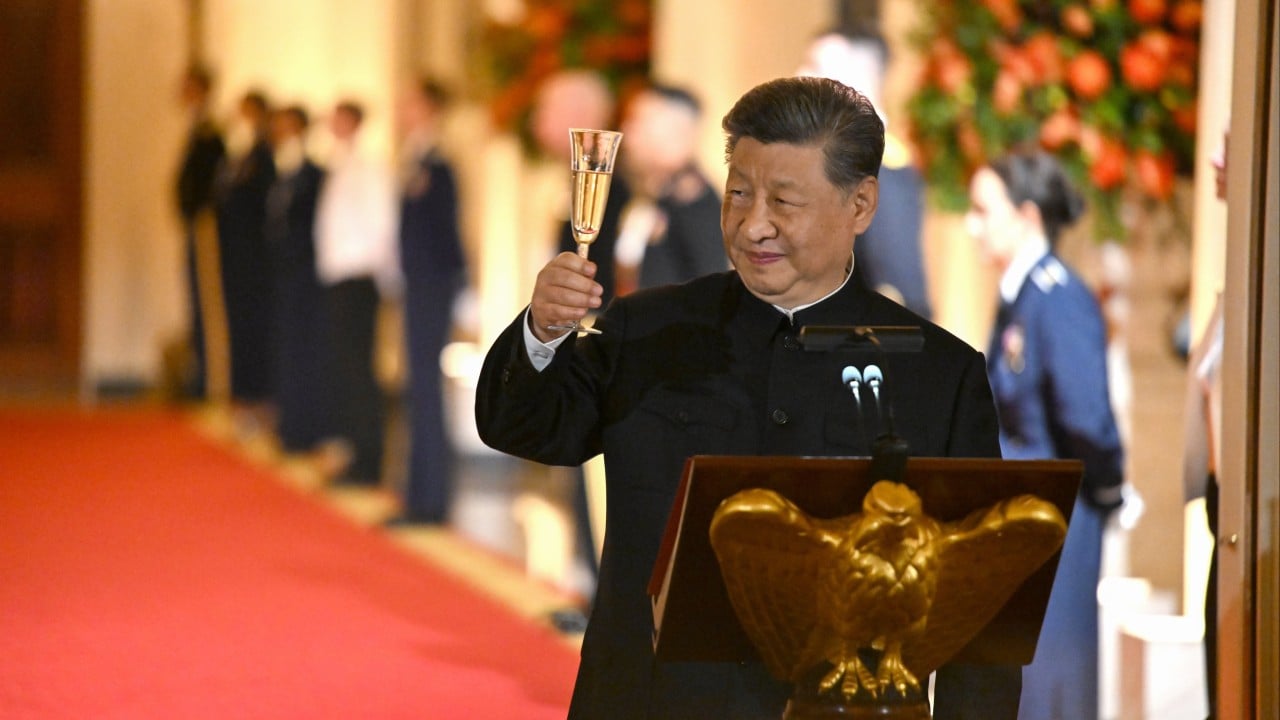
History gets weird when politicians start weaponizing old battlefields. Donald Trump recently threw a curveball into modern geopolitical shouting matches by publicly hailing China as a vital World War II ally. Beijing didn't ignore it. President Xi Jinping quickly leaned into the rhetoric, reminding everyone about historical bonds forged in blood and fire.
If you've been watching Washington and Beijing trade constant rhetorical punches over trade deficits and tech restrictions, this sudden pivot feels jarring. But it reveals how past conflicts still dictate modern statecraft.
Let's look at why this matters right now.
The Weight of Shared History
Memory is a powerful diplomatic tool. During the Second Sino-Japanese War, American pilots and Chinese ground forces shared intelligence, supplies, and trench lines against a common enemy. The Flying Tigers remain a famous piece of this puzzle. American volunteer pilots flew defense missions for China, leaving a legacy that still resonates in specific cultural circles today.
Xi Jinping knows how to use this heritage. When leaders talk about bonds forged in blood and fire, they aren't just giving history lessons. They are drawing a straight line from past cooperation to present expectations.
History provides a safety valve. When current policies hit a boiling point, leaders reach back into the archives for a time when things worked better. It gives both sides a rhetorical bridge to cross without losing face.
Why Trump is Playing the WWII Card
Trump operates on personal relationships and transactional diplomacy. Praising China's wartime sacrifices isn't standard Republican talking point material these days. Most hawkish politicians treat Beijing strictly as an adversary.
So why change the tune?
- It disrupts predictable bureaucratic narratives.
- It appeals to a sense of mutual respect that predates modern ideological divides.
- It creates a psychological wedge against tighter alliances forming elsewhere.
Diplomacy requires movement. If you box an opponent into a permanent corner, you lose all leverage. By acknowledging a shared victory from 1945, Trump keeps lines open. It is classic tactical unpredictability. You keep the other guy guessing whether you are about to drop tariffs or offer a handshake.
The Strategic Reality Behind the Rhetoric
Nostalgia doesn't override trade wars, semiconductor bans, or naval tensions in the South China Sea. Beijing and Washington are locked in a structural competition for global dominance. A sweet memory from the 1940s won't change supply chains or security pacts.
Yet, ignoring these symbolic moments is a mistake. Global markets react to tone shifts. When top leaders soften their language, corporate strategists take notes. Supply chain risk management depends on spotting these tiny diplomatic thaws before they turn into major policy shifts.
What Executives and Analysts Miss
Most observers look at geopolitics through a purely binary lens. They think countries are either friends or enemies. Real life is messier. Superpowers cooperate on climate talks while competing aggressively on microchips. They trade barbs in public while cutting deals behind closed doors.
When Trump highlights a wartime alliance, he reminds us that diplomacy has multiple gears. You can wage an economic campaign while acknowledging a shared historical debt.
Navigating the Noise
If you are trying to make sense of international relations or adjust your business strategy for global trade, stop listening to the daily panic cycle. Headlines change every hour. Structural realities move much slower.
Pay attention to the historical touchstones leaders invoke. They tell you which audience the politician is trying to reach and what kind of leverage they are trying to build.
Keep an eye on how state media in Beijing frames these comments. Watch for reciprocal gestures in Washington. That is where the actual temperature of international relations gets measured. Look past the social media clips and focus on the long-term patterns of engagement.