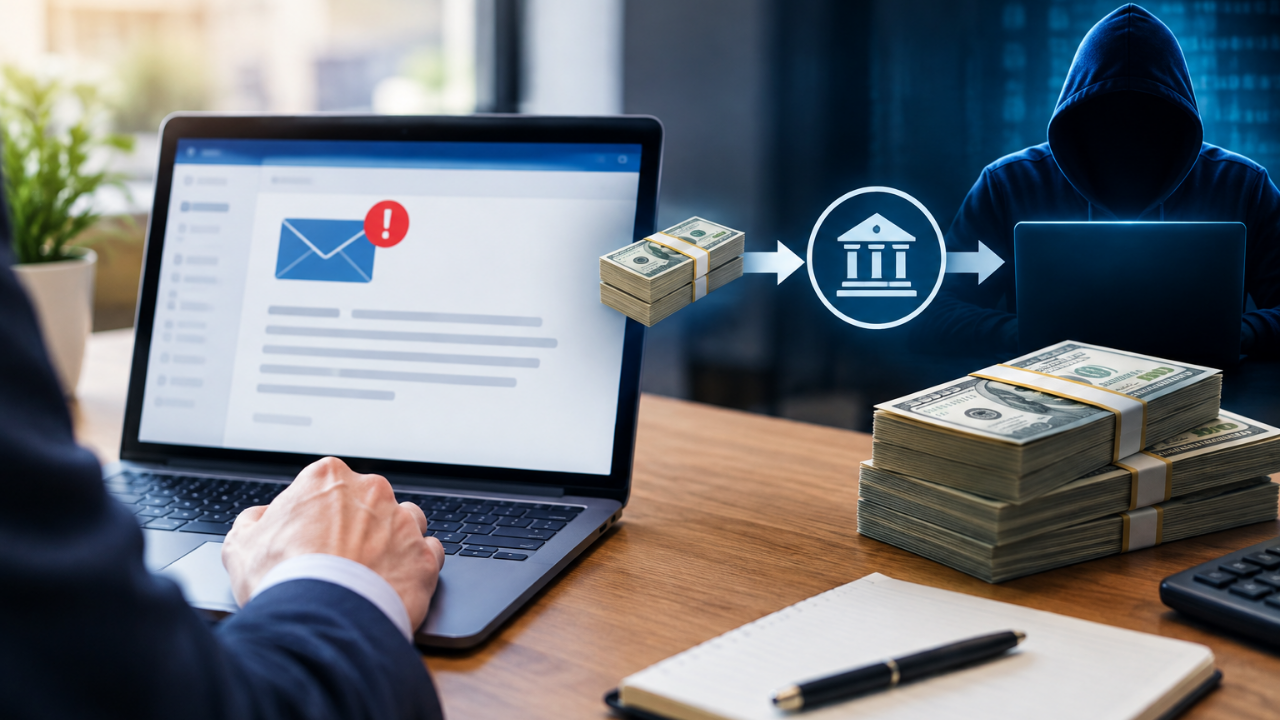
You wire over $800,000 to what looks like a trusted vendor, thinking you're just paying the bills. Then silence. Four years later, the federal government hands back less than half. That is the harsh reality an Iowa company recently faced after walking straight into a classic financial trap.
Business email compromise remains one of the most destructive threats facing modern organizations. It doesn't rely on malware or hacking firewalls. Instead, it preys on ordinary human routines, busy finance departments, and simple trust.
How the Eight Hundred Thousand Dollar Trap Sprang
In the middle of 2022, an Iowa business processed what looked like routine vendor invoices. The payment instructions had changed slightly. Nothing screamed danger. The emails came from addresses that looked almost identical to actual suppliers, complete with the right terminology and formatting.
Employees executed the wire transfers without double-checking the modifications through an independent channel. By the time anyone realized what happened, over $800,000 had vanished into accounts controlled by fraudsters.
This isn't an isolated incident. The Federal Bureau of Investigation reports that business email schemes drained over $55 billion globally between 2013 and 2023. Cybercriminals study supply chains, learn who talks to whom, and strike when accounting teams are rushed.
Tracking Stolen Funds Across Four Years
Getting scammed is fast. Getting your money back takes years of exhausting detective work.
Once the Iowa firm realized it was defrauded, it reported the crime to the FBI's Internet Crime Complaint Center. Federal investigators began tracking the money as it bounced through multiple accounts designed to obscure the paper trail.
Investigators eventually traced a portion of the stolen funds to a Wells Fargo bank account held by Manuel and Ibrahim Hazim. The U.S. government seized roughly $372,500 from that specific account through a federal forfeiture proceeding.
The account holders claimed they had no idea the cash was tied to criminal activity. They argued the deposits came from a currency exchange arrangement involving wire transfers to brokers overseas. But court documents revealed a glaring hole in their story. They didn't own or sell the goods mentioned on the check memos—such as a Mack Truck—and couldn't prove any legitimate business ties to the person who deposited the money.
The U.S. District Court for the Northern District of Iowa ruled the funds subject to forfeiture. The government successfully recovered about $375,000 total. That left the original Iowa business staring at a massive, permanent six-figure loss.
Why Traditional Defenses Keep Failing
Most companies think standard antivirus software or spam filters will protect them. They won't. Fraudsters use psychological manipulation, not technical exploits.
When an email arrives from a known vendor asking to update bank routing numbers for upcoming payments, most internal teams process it like any other administrative task. They want to pay bills on time. They don't want to anger suppliers by delaying invoices.
Criminals weaponize that exact urge for efficiency.
How to Protect Your Organization Today
If you want to keep your company safe from similar losses, you have to build strict friction into your payment workflows. Trust but verify is a weak strategy when hundreds of thousands of dollars are on the line.
- Mandatory Voice Verification: Never change payment details based solely on an email request. Require a phone call using a pre-established, trusted phone number—not the phone number listed in the suspicious email.
- Segregation of Duties: Ensure the person approving a vendor change is never the same person executing the wire transfer.
- Employee Training: Run regular phishing simulations that specifically test your finance and accounts payable teams against vendor impersonation tactics.
- Immediate Incident Response: If a fraudulent transfer slips through, notify your bank and file an IC3 complaint within the first twenty-four hours to maximize the slim chances of freezing funds.
Recovering stolen cash is rare, slow, and expensive. The best defense is stopping the transfer before it leaves your account.