Most people assume artificial intelligence speaks every language fluently. It doesn't.
If you ask an off-the-shelf chatbot to translate a critical phrase for a pregnant woman in Malawi, the system might completely mangle the context. A phrase meaning a patient's "water has broken" can easily translate into literal nonsense like "thrown away water." In a clinical setting, that kind of machine translation error isn't just an annoyance. It's dangerous.
Bill Gates and his foundation are pushing hard for the smart use of AI to bridge global inequality, but they've run into a massive structural wall: language data.
The core issue is simple. Modern language models were fed a digital diet scraped straight from the internet. They grew up reading Reddit, Wikipedia, and English-heavy web forums. Because the internet is fundamentally unrepresentative of global demographics, these tools fail millions of people living outside Western tech hubs.
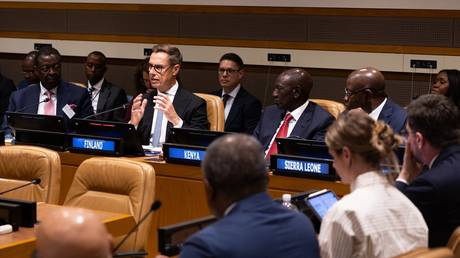
To fix this, the Gates Foundation formed a coalition of 60 organizations. Tech giants like Google, Anthropic, and the OpenAI Foundation are joining forces to build representative language data sets. The goal is ambitious. They want to make AI accessible and accurate in underrepresented languages for more than 3 billion people over the next five years.
The Original Sin of Internet Scraping
Training data shapes everything. When you build a system predominantly using web-scraped English text, you bake Western biases and linguistic blind spots directly into the architecture.
E.M. Lewis-Jong, CEO of the Mozilla Data Collective, points out the obvious flaw. The internet isn't a representative space. Expecting a culturally diverse and accurate system from a model trained mostly on Western online forums is wishful thinking.
Local nuances matter. Dialects matter. Cultural context matters. Without local data collection, automated systems default to literal translations that fail everyday users. Google has tried chipping away at this by funding Project Vaani, collecting tens of thousands of hours of audio across various districts in India to capture speech dialects on the ground. Anthropic is working with the foundation to improve its chatbot data sets for regional crops and health outcomes, openly admitting its models lag in African languages.
Why Speed and Caution Must Coexist
Some tech executives argue for hitting the brakes on advanced model development. They worry about cybersecurity threats and societal disruption.
Gates Foundation CEO Mark Suzman takes a different stance. He argues that even if AI development froze today, humanity would still desperately need to build these localized language sets for the tools we already use. Governments can and should regulate safety issues or child protection, but holding back humanitarian applications hurts poor communities who are already shut out of technological advancements.
The foundation committed $1 billion toward AI-focused initiatives aimed at health outcomes, educational tools, and agricultural practices for small farmers worldwide. None of those investments will work if the underlying language translation breaks down.
Elizabeth Kelly, head of beneficial deployments at Anthropic, puts it bluntly. You can't improve patient health outcomes or student literacy globally unless you fix the language piece first.
What Needs to Happen Next
Building inclusive AI requires changing how training data gets gathered.
- Shift away from web scraping: Relying on automated crawlers to harvest public forums leaves massive blind spots for marginalized dialects and low-resource languages.
- Partner with local communities: Data collection must happen on the ground, with local speakers consenting to share cultural and linguistic datasets on their own terms.
- Track concrete commitments: A dedicated secretariat needs to monitor what coalition members deliver so gaps get filled quickly instead of ignored.
Fixing artificial intelligence requires looking past Silicon Valley priorities. If the technology is going to lift up farmers in Malawi, students in rural India, or patients in remote health clinics, it has to learn how to speak their language accurately.