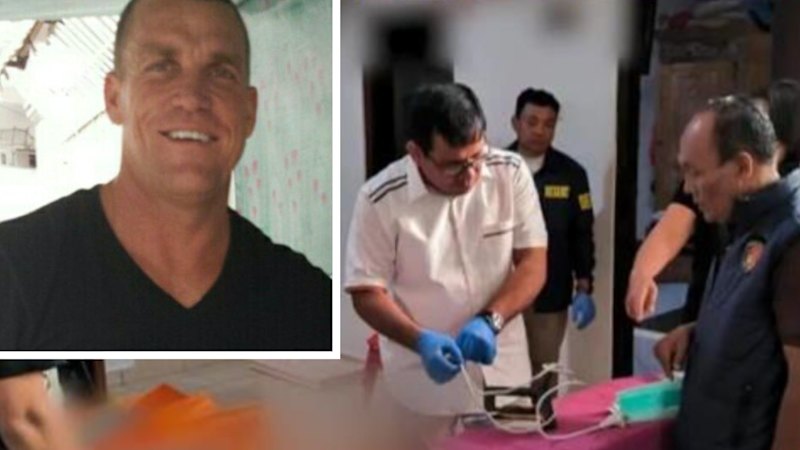
Two young lives ended in a quiet bungalow in Legian. Archie and Laura are gone. The children, aged six and four respectively, were killed by their Australian father, Damien John Shaw, in a shocking double murder-suicide that has left a tight-knit Balinese community and an expat network reeling.
Staff at the Blue Dolphin Playskool in Kuta remember the kids as kind and bright. They spent half their lives walking through those school doors. Locals in their neighborhood watched them play chasey in the courtyard just hours before the attack. Now, those same neighbors are left picking through the wreckage of a tragedy that didn't just happen overnight.
The Anatomy of an Unraveling Life
Why do these horrors happen? The reality is rarely simple. Experts point out that tragedies involving parents killing their children rarely occur in a vacuum. Relationship separation or the threat of it acts as a major red flag.
Police records and local accounts paint a picture of a deteriorating situation. Shaw, a 56-year-old retired oil and gas worker from Western Australia, had built a substantial property portfolio across Perth and the state's south-west. Financially, he was secure. Mentally, he was fracturing.
According to Denpasar police, Shaw and his wife had faced marital strain years prior, nearly divorcing in 2022 before patching things up. But a month before the killings, the friction returned. His wife stated she wanted a divorce. In response, Shaw’s behavior spiraled, and he began making threats to take his own life.
Friends noted he was increasingly isolated, grumpy, and erratic. Some tried to nudge him toward psychological help. He refused.
The Warning Signs We Keep Missing
Severe and untreated anxiety doesn't just vanish. People close to Shaw noted he grew overwhelmed by everyday tasks, like helping with homework. Yet, in expat circles and local gyms, mental health issues often go unaddressed, brushed off as eccentricity or bad moods.
Putu Senapati, a spokesman for Bali’s provincial government, noted the limits of institutional oversight. The government can't watch everyone around the clock. He emphasized that social sensitivity has to come from the community—expats and locals alike need to recognize when someone is slipping into a dangerous mental state.
Monash University professor Kate Fitz-Gibbon, an international expert in family violence, stresses that lethal outcomes often follow a predictable cocktail of controlling behavior, deteriorating well-being, and suicidal ideation tied to relationship breakdowns. When control slips, the risk spikes.
Keeping the Focus on Archie and Laura
It's easy to get lost in the background of the perpetrator—his property investments, his gym habits, his moody demeanor at local bars. But criminologists and child safety advocates urge a different priority.
The kids must remain at the center. Archie and Laura's deaths highlight an urgent, ongoing failure in how communities and legal systems identify and respond to children trapped in volatile environments. When a parent threatens self-harm or exhibits escalating volatility during a separation, children are instantly placed in the danger zone.
If you or someone you know is struggling with mental health, relationship pressures, or crisis, help is available. In Australia, you can reach Lifeline at 13 11 14 or the Kids Helpline at 1800 55 1800. Recognizing the signs early is the only way to stop the next tragedy before it starts.


:max_bytes(150000):strip_icc()/copenhagen-dk-COPENHAGENTG0721-4a481cb6025b43d1a781b1571b144f46.jpg)