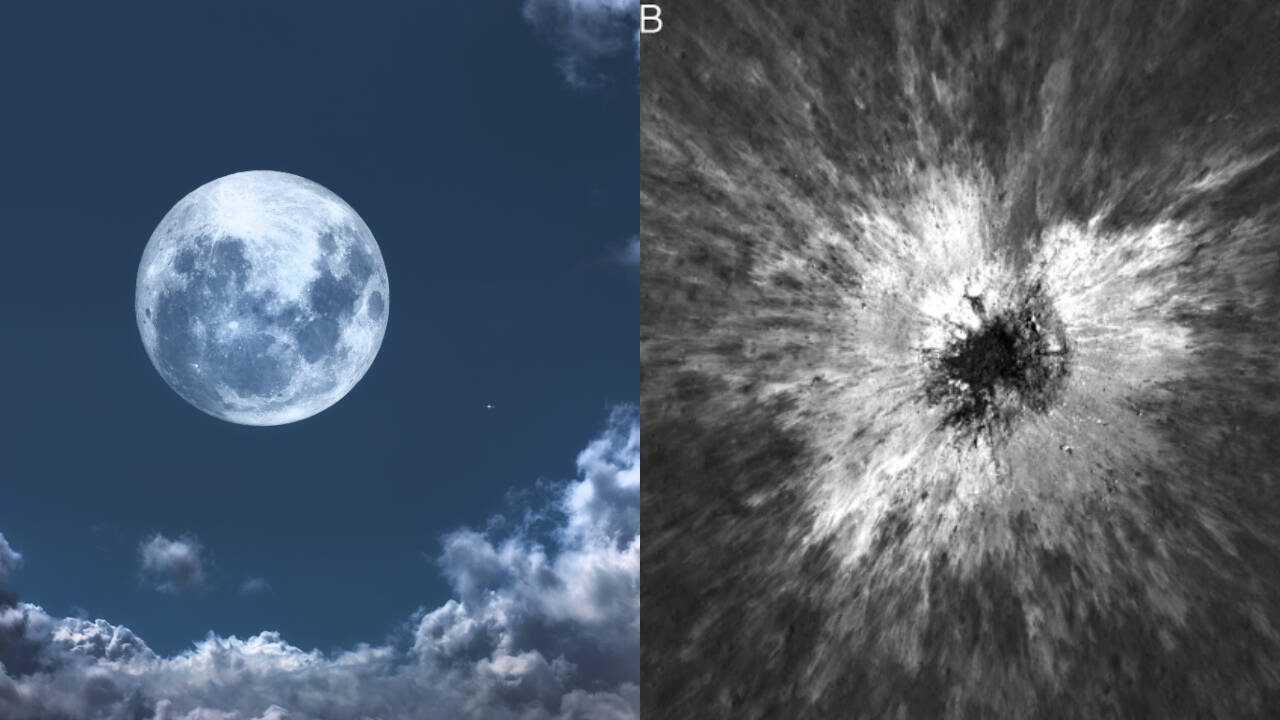
A massive space rock slammed into the Moon in 2024, and nobody on Earth had any idea it happened until months later. We spend billions tracking near-Earth objects, yet a space collision carved out a 728-foot crater right on the lunar near side without a single telescope catching the flash in real-time.
NASA's Lunar Reconnaissance Orbiter (LRO) eventually spotted the scar while sorting through old archives, and the numbers are staggering. The crater measures about 728 feet across and plunges 141 feet deep, making it the largest recent impact crater discovered in the solar system. You might also find this similar story insightful: Why Independent Media Rooms Are Building Their Own Apps To Survive Zero Click Search.
The Mystery of the Missing Observation
You'd think an impact big enough to leave a crater larger than Rome's Colosseum would light up our night sky or trigger every sensor we have. It didn't. The collision occurred quietly on the near side of the Moon during 2024, escaping the gaze of professional observatories and amateur stargazers alike.
The first hints didn't come from a live telescope feed. Instead, researchers stumbled upon the anomaly in August 2025 while picking through the LRO’s massive backlog of wide-angle imagery. Once scientists focused high-resolution cameras on the coordinates, the massive scar named after late lunar scientist Thomas McGenchin became impossible to ignore. As discussed in detailed coverage by Ars Technica, the results are significant.
Impacts of this sheer scale are rare. Current models suggest an event this powerful hits the Moon only about once every 132 years. Finding one that formed yesterday in geological terms gives researchers an unprecedented window into how planetary surfaces react to sudden violence.
How the Moon Keeps Resurfacing Itself
The discovery reveals that the lunar surface is far more dynamic than textbook diagrams suggest. Data from the LRO indicates that material blasted out from this single impact sprayed across more than 66 miles of surrounding terrain. A second study tied to the event uncovered a four-mile-wide cold zone around the crater, proving that the upper layer of lunar soil, or regolith, undergoes rapid alteration.
Data shows that impacts of this magnitude can churn up the top inch of lunar soil roughly every 80,000 years. If you've ever wondered about the permanence of those famous Apollo footprints left by astronauts, you have your answer. They won't last forever. Geological turnover and fresh meteorite debris will eventually erase them completely.
What This Means for Future Moon Bases
We are heading back to the Moon to stay, which changes how we view space rocks. Space agencies plan to build permanent habitats, meaning we can no longer treat lunar impacts as abstract cosmic scenery.
Debris from the 2024 impact didn't just drop straight down; it traveled vast distances across the terrain. If a similar strike happens near a crewed base, high-speed ejecta could pose a severe threat to solar panels, habitats, and life support systems. Engineers designing upcoming lunar architecture now have to factor in blast radiuses and flying debris patterns that reach dozens of miles away from the actual impact site.
The Moon remains a battered shield, taking hits so we don't have to. This latest find proves that space is still full of blind spots, and staying safe up there means paying attention to the scars we can't see coming.


